Irwin Stein
Mid-Century Modern Architect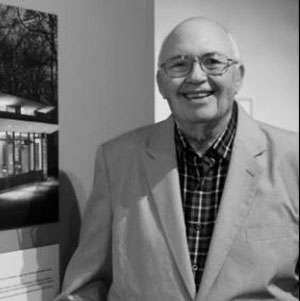
Among Philadelphia’s mid-century architects, Irwin Stein (b. 1930) carved a unique path, blending modernist ideals with practical ingenuity. A native Philadelphian, he graduated from the University of Pennsylvania in 1953, studying under luminaries like Paul Rudolph. His early career in the offices of modernist pioneers Oscar Stonorov, Frank Weise, and Howell Lewis Shay shaped a design ethos rooted in clean lines, functional innovation, and harmony with the natural environment.
At just 28 years old in 1958, Stein launched his independent practice amid a sparse client roster, relying on personal connections to secure his inaugural commissions. One such project, the Wachs House in Wallingford, Pennsylvania, exemplifies his resourceful approach. Designed for young dentist Morton Wachs and his wife Elsa, this split-level residence ingeniously combined a family home with a professional office on a wooded lot. Its most striking feature, an angular diamond-patterned roof evoking the bold geometries of mid-century roadside architecture, initially sparked neighborhood concerns of a “roof catastrophe” or even a gas station in disguise. Yet, complemented by dramatic floor-to-ceiling windows that flood the interiors with light and frame the surrounding foliage, the house has endured as a modernist touchstone, gracing the covers of shelter magazines over half a century later. An addition in 1968 expanded the space to accommodate the Wachs family’s growth, further demonstrating Stein’s adaptability.
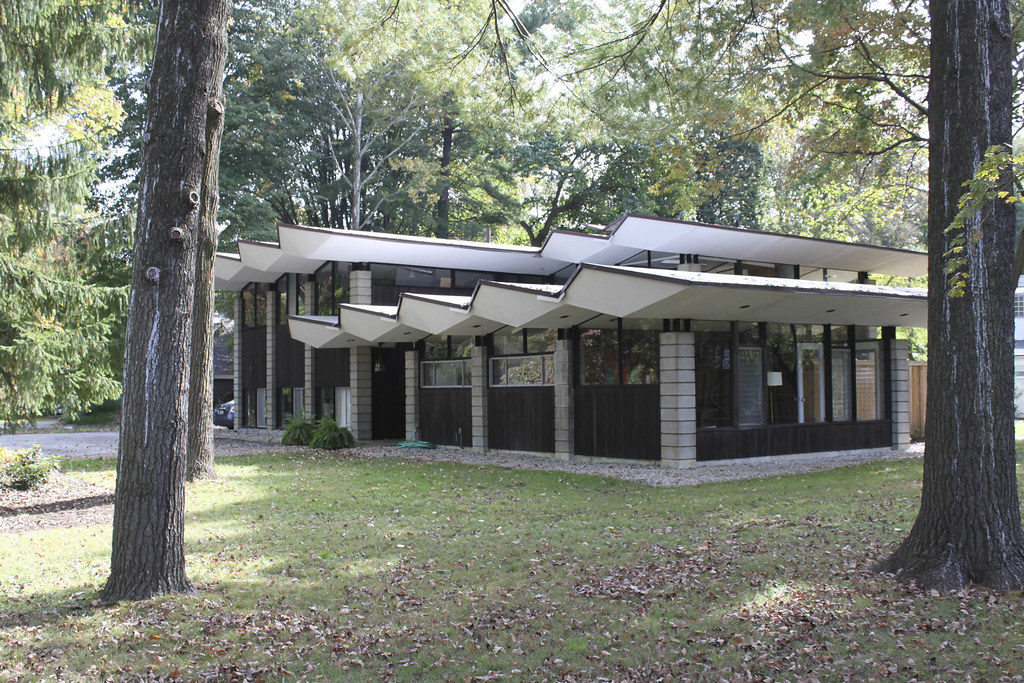
The Wachs House – Architect Irwin Stein
From these modest beginnings, Stein’s portfolio expanded to encompass over 100 commissions, reflecting a versatility that set him apart in the Delaware Valley’s architectural scene. His work spanned suburban residences, commercial properties, garden apartments, industrial buildings, and sun-drenched retreats in Sanibel, Florida. Stein’s designs often infused utilitarian structures with artistic flair, as seen in a 1976 restoration project in Abington, where he revitalized a Victorian-era building with modernist interventions. Another notable endeavor was an artist’s studio addition to a home linked to Jefferson University, where Stein created a space that seamlessly blended creative functionality with the existing architecture. His mixed-use buildings, featuring informal volumes and evocative facades reminiscent of Philadelphia School aesthetics, underscored his ability to navigate diverse scales and contexts.
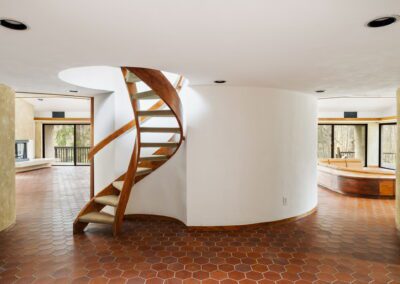
At the heart of Stein’s oeuvre stands the Stein House, a 1980 personal residence that encapsulates his mature philosophy. Crafted for his own family, this five-bedroom, four-bathroom haven represents an evolution of mid-century principles into the demands of the late 20th century with bold cantilevers, expansive glazing that dissolves boundaries between interior and woodland exterior, and a swirling spiral staircase that adds a dynamic, sculptural core. Here, Stein’s affinity for geometry and light reaches its apex, creating livable spaces that feel both innovative and intimately human. Influenced by his collaborations and Philadelphia’s modernist heritage, the house stands as a testament to his belief in architecture as a responsive art form, adapting to familial rhythms while maintaining a timeless edge.
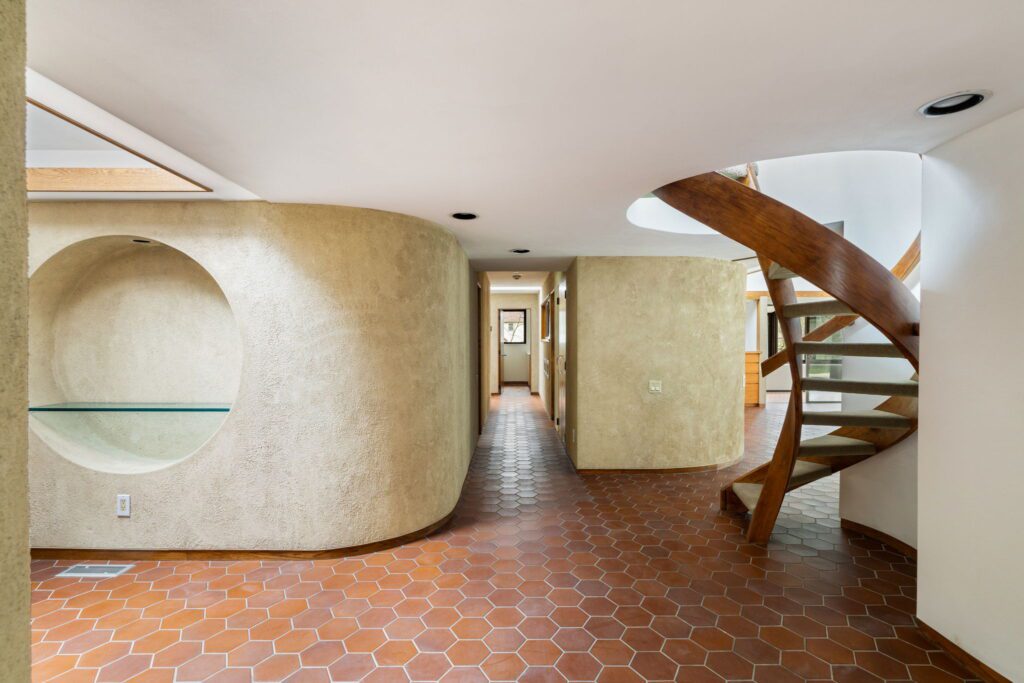
The Stein House – Sculptural Spiral Staircase
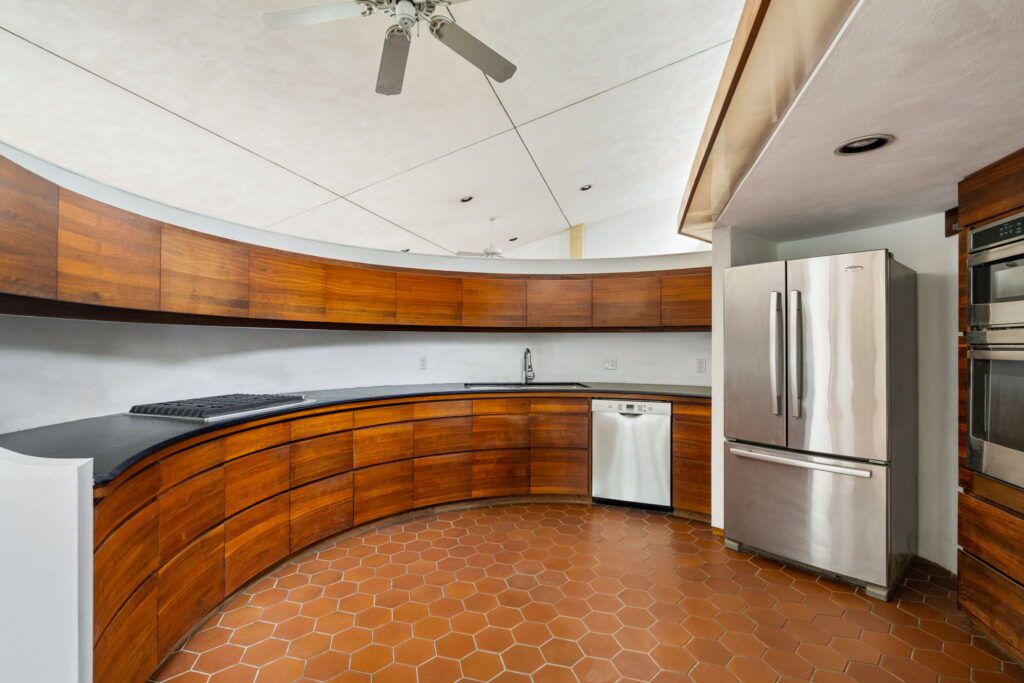
The Stein House – Circular Kitchen
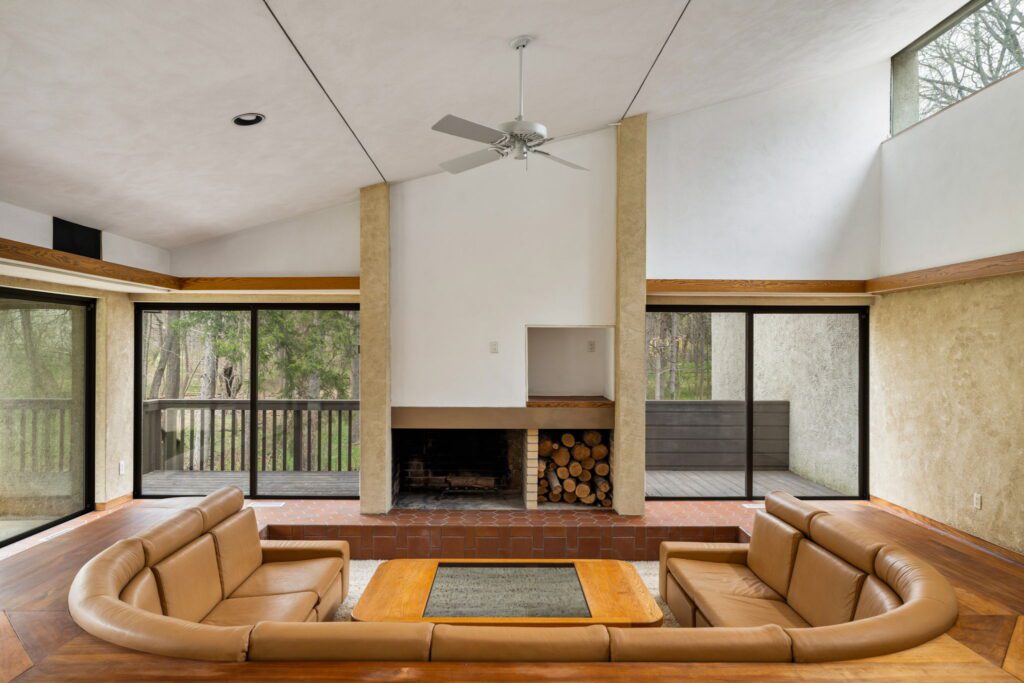
The Stein House – Conversation Pit
Stein’s legacy endures in the quiet persistence of his buildings across the region, a body of work that prioritizes collaboration and context over rigid dogma. Through projects like the Wachs House and his eponymous Gladwyne retreat, he contributed to the narrative of Pennsylvania modernism, proving that thoughtful design can transform the ordinary into the extraordinary.